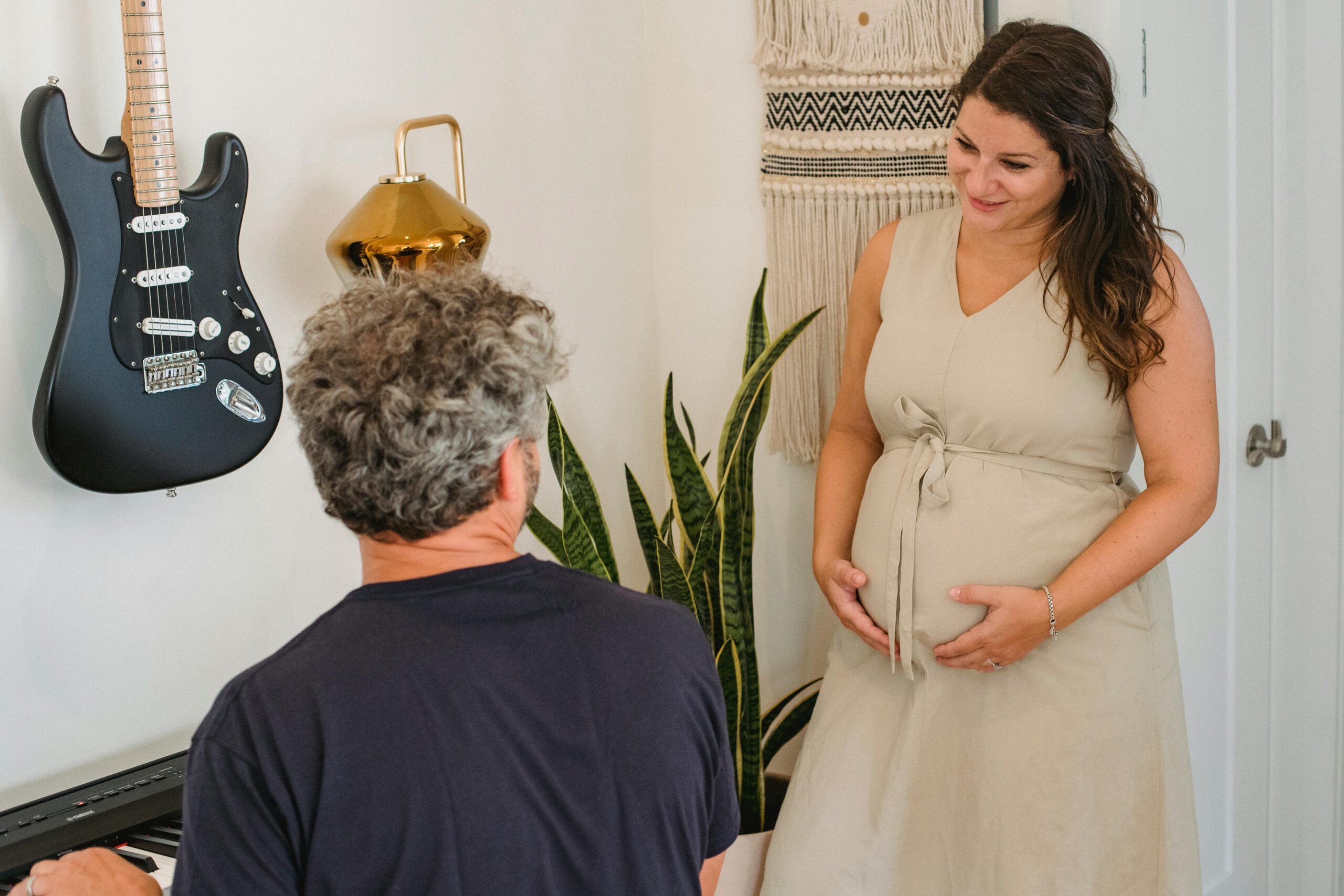
Long before Elijah was born, I was already playing music for him. I did not know exactly what it would do, but something in me felt that it was the right thing to do. Now, looking back and reading the research, I can say with confidence that exposing your baby to music before birth is one of the simplest and most powerful things you can do as a parent. And the science behind how prenatal music affects your baby’s development is genuinely fascinating.
When Can Your Baby Actually Hear Music?
This is usually the first question parents ask, and it is a good one. Your baby does not arrive hearing-ready from the moment it enters the womb. According to UNICEF’s parenting guide, babies begin to hear their first sounds around 16 to 18 weeks into pregnancy. By the third trimester, their hearing is sufficiently developed to respond to sounds outside the womb, including music.
This means that from around the halfway point of your pregnancy, your baby is already listening. Every song you play, every lullaby you sing, and every melody that floats into the room is reaching those tiny ears and doing something meaningful inside that developing brain.
What the Research Says
The science on prenatal music is not just wishful thinking. Real, credible studies have looked at what happens to babies who are exposed to music in the womb, and the results are encouraging.
A study from the University of Barcelona found that daily musical exposure during the final weeks of pregnancy was associated with improved neuronal encoding of speech sounds in newborns. In simpler terms, babies who heard music regularly before birth were better at processing the building blocks of language right from the start. That is a remarkable head start for a child who has not even said their first word yet.
A separate study published in BMC Pediatrics reviewed multiple research trials and found that sound stimulation during pregnancy can form memory traces in the fetal brain that carry forward into the newborn period. This means your baby is not just hearing the music and forgetting it. They are actually remembering it on a neurological level, which shapes how they respond to sound after birth.
Benefits of Prenatal Music for Your Baby
Better Speech and Language Processing
As mentioned above, babies exposed to music before birth develop stronger neural encoding of speech sounds. This gives them a natural advantage when it comes to learning to talk, recognizing words, and eventually learning to read. Music and language share many of the same brain pathways, so the more your baby hears music in the womb, the better prepared their brain is for language development.
Stronger Memory from Birth
Research shows that fetuses can form and retain memories of sounds heard in the womb. Newborns whose mothers played specific music during pregnancy have shown recognition responses to those same songs after birth. This early memory formation is a sign of healthy brain development and gives your baby a cognitive edge right from the start.
Calmer, More Settled Behavior After Birth
One of the most practical benefits of prenatal music is its effect on your baby’s behavior after birth. Studies have found that babies whose mothers listened to music during pregnancy tended to be calmer and easier to soothe in the early weeks of life. The familiar sounds from the womb offer comfort, helping newborns adjust to the noisy, bright world they have just entered.
Benefits for You Too
Let us not forget the mama in all of this. Playing music during pregnancy is not just good for your baby. It is good for you. Music reduces stress and anxiety, lowers cortisol levels, and promotes relaxation, all of which create a better environment for your growing baby. A calm, relaxed mother means a calmer, less-stressed baby. It is a beautiful cycle.
How I Did It with Elijah
I played all kinds of music during my pregnancy with Elijah. Classical, OPM, a little bit of everything. I wanted his little ears to be exposed to different rhythms, tempos, and moods. After he was born, I kept the music going. Different genres throughout the day, soft lullabies at night, and upbeat songs during playtime.
Looking back, I believe that early exposure to music shaped the way Elijah listens, learns, and expresses himself today. He has always been drawn to music, and I firmly believe that the foundation was laid before he even took his first breath.
Make sure the speakers or sound system you use have a good frequency response so your baby can actually hear the music clearly. Poor audio quality limits what those little ears pick up, especially in the lower and higher frequency ranges that carry so much of what makes music rich and meaningful.
Practical Tips for Playing Music During Pregnancy
You do not need anything fancy to get started. Here are a few simple tips. Play music at a comfortable volume. Loud music is not better. Soft to moderate levels are ideal. Vary the genres. Classical is wonderful, but do not limit yourself. Folk, jazz, soft pop, and even gentle acoustic music all offer different patterns and rhythms for your baby to absorb. Sing to your bump. Your voice is the most familiar and comforting sound your baby will ever hear. Do not be shy. Make it part of your daily routine. Morning music while you get ready, evening lullabies before bed. Consistency helps build those memory traces in your baby’s brain.
The Bigger Picture
Prenatal music is just the beginning. Once your baby is born, continuing to surround them with music will build on everything that started in the womb. To learn more about how music shapes your child’s growth after birth, read our post on the Benefits of Music Education in Early Childhood. And when your little one is ready for their first instrument, check out Why Piano Is the Best First Instrument for Kids for a guide on where to start.
The music you play today is already shaping the person your child will become tomorrow. That is a beautiful thing worth starting as early as possible.
Did you play music during your pregnancy? Share your experience in the comments below. We would love to hear your story!