
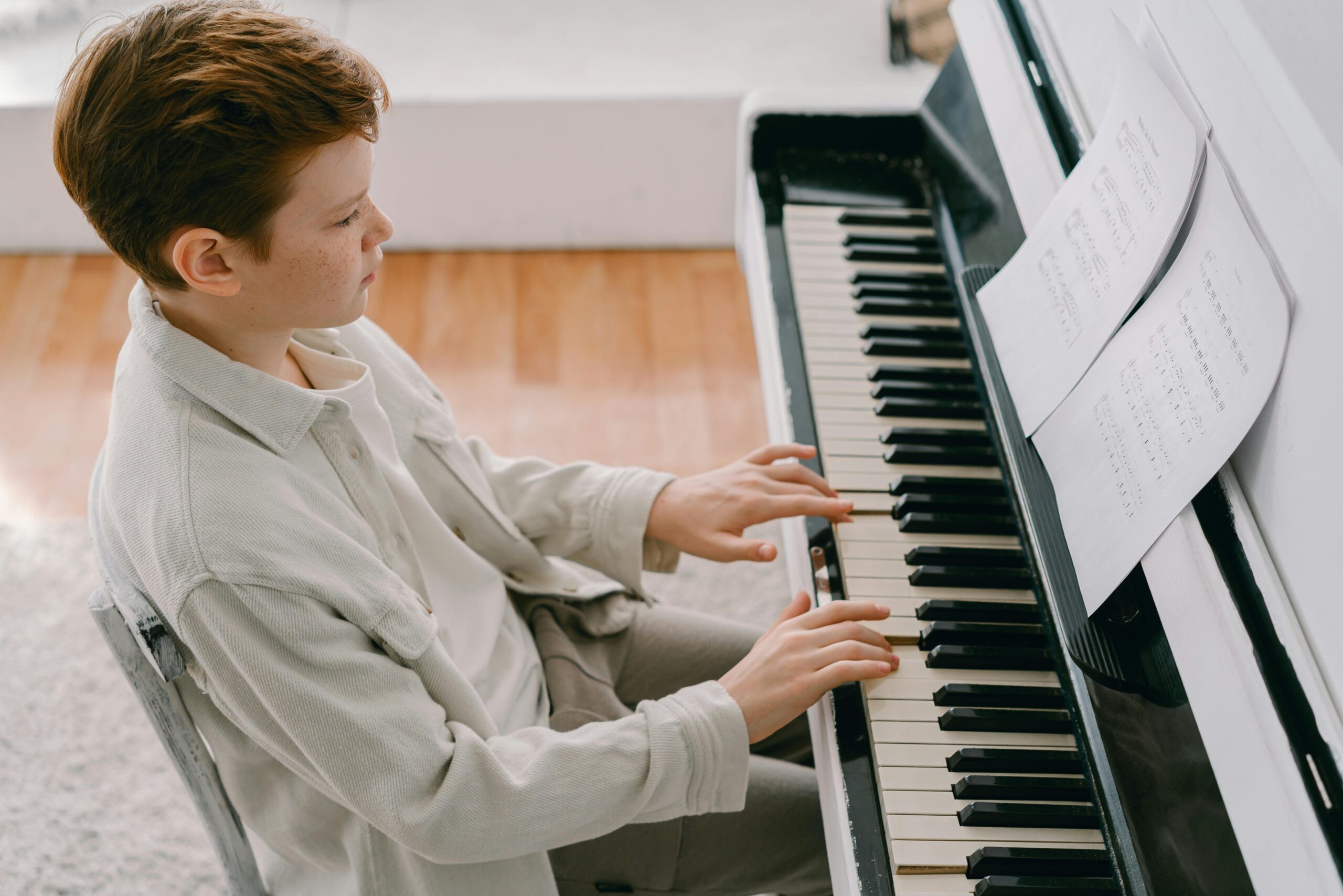
Music education in early childhood is one of the most powerful gifts you can give your child. It is not just about learning to sing or play an instrument. It is about giving your child a head start in life, building skills that will benefit them for years to come. From the moment they are born, and even before, children are wired to respond to music. As a mom, I have experienced this firsthand with Elijah, and the research backs it up completely.
I exposed Elijah to prenatal music and continued to play different genres after he was born. He showed interest in music early on, and I firmly believe that early exposure has shaped how he learns, listens, and expresses himself today. If you’re a parent wondering if investing in music education for your child is worthwhile, the answer is unquestionably yes.
What Is Music Education in Early Childhood?
Music education in early childhood refers to any structured or unstructured musical activity introduced to children from birth up to around eight years old. This includes listening to music, singing, clapping rhythms, dancing, and learning to play an instrument. It does not have to be formal lessons in a studio. It can be as simple as singing nursery rhymes at home, playing music during playtime, or introducing your toddler to a small keyboard or drum.
According to the National Association for Music Education, all young children have the capacity for music learning, and each one has the right to a musical childhood. Music education should not be seen as a bonus or an extracurricular activity. It is an essential part of a child’s overall development.
Why Piano Is a Great First Instrument
If you are thinking about introducing your child to an instrument, piano is widely considered one of the best starting points. It is visual and intuitive. The keys are laid out in a simple pattern that is easy for young minds to grasp. Unlike string instruments, piano does not require tuning before every session, which makes it practical for everyday use at home. It also does not require the physical adjustments that wind instruments demand, making it accessible even for very young children.
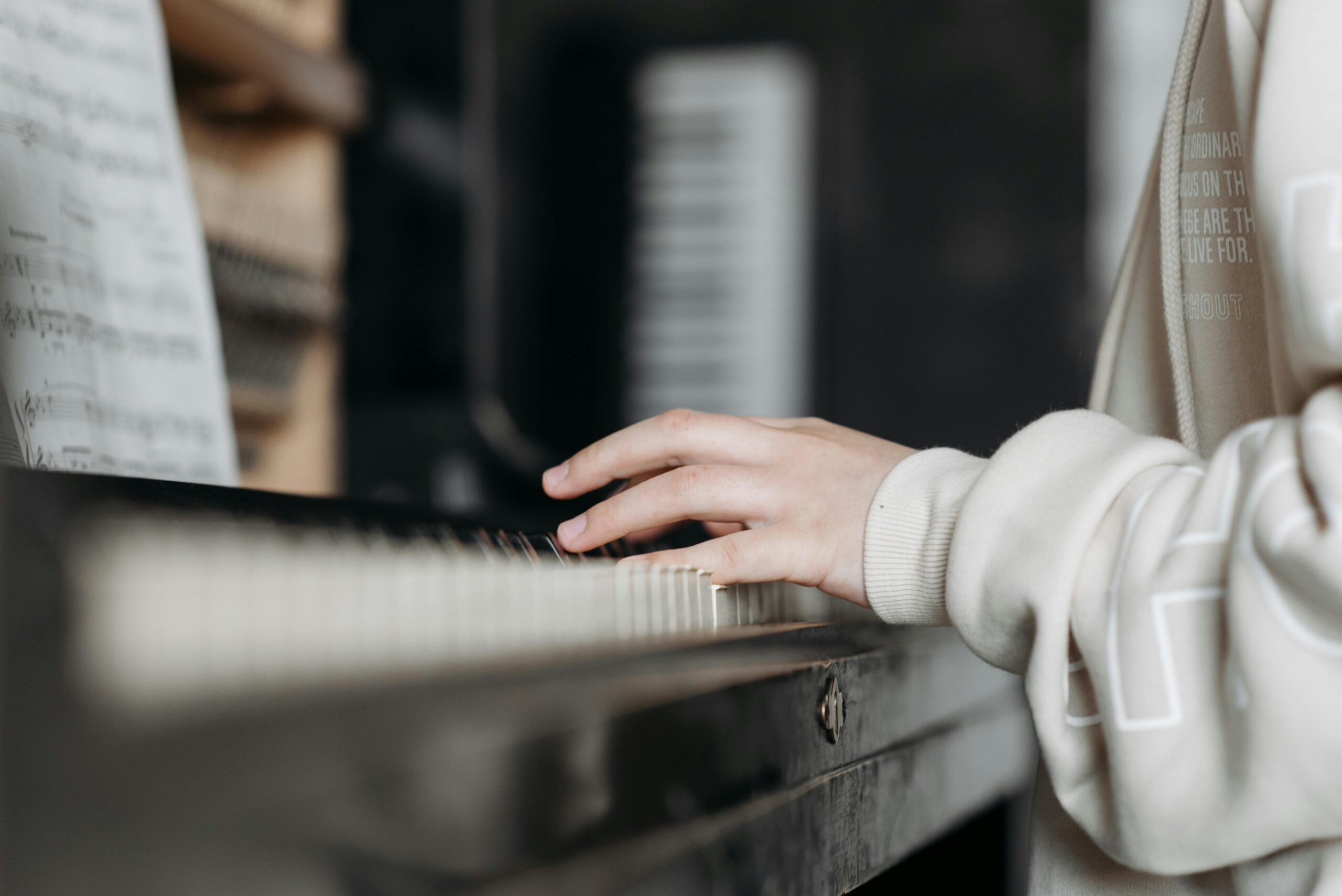
Learning piano in early childhood has been shown to enhance self-discipline, coordination, concentration, and abstract reasoning skills. Playing the piano requires both hands to work independently, which strengthens the connection between the two hemispheres of the brain. That kind of neural development has benefits that go far beyond music.
The Science Behind Music and Brain Development
One of the most compelling reasons to invest in music education in early childhood is what it does to a child’s brain. Research from the University of Maryland College of Education shows that music promotes cognitive development by training young brains to recognize patterns and sequences, skills that are directly linked to early math and reading abilities.
A study found that exposure to music sharpened infants’ brain responses in both the auditory cortex and the prefrontal cortex, the area that manages attention, pattern detection, and cognitive control. In simple terms, music makes babies smarter and more attentive. The rhythm and repetition in songs also strengthen memory, which is why children can remember song lyrics long after they have forgotten other information.
School of Rock’s research also highlights that children who start learning an instrument before the age of seven develop greater neuroplasticity, meaning their brains are more flexible, adaptable, and capable of growth and healing throughout their lives.
Benefits of Prenatal Music
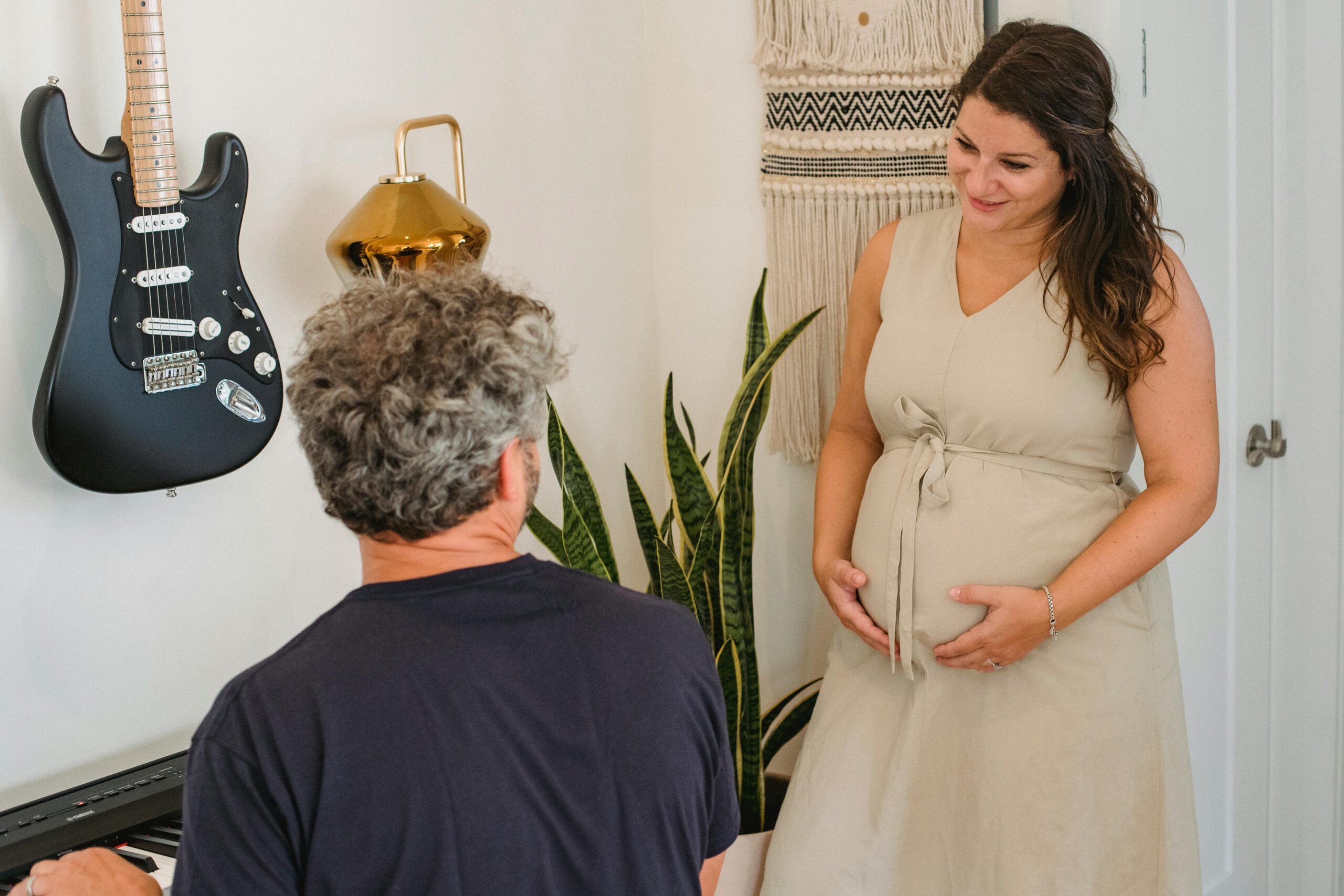
Music education in early childhood actually begins before birth. Playing music during pregnancy has been shown to provide real benefits for both mother and baby. For the mother, music reduces stress and anxiety during pregnancy. For the baby, it provides gentle sensory stimulation in the womb that can influence brain development.
Research cited by the National Association for Music Education confirms that music learning and engagement begin before birth. Babies can hear sounds in the womb from around the second trimester, and they are already building a relationship with sound and rhythm before they take their first breath. Exposing your baby to music during pregnancy is one of the simplest and most natural things you can do to give them a strong start.
Key Benefits of Music Education in Early Childhood
1. Language and Literacy Development
Music and language share many of the same brain pathways. Songs introduce children to new words, rhythms, and sounds that directly support language development. Children who are exposed to music from an early age tend to develop stronger vocabularies and better reading skills. The repetition in songs helps them internalize grammar and sentence structure naturally, almost like a game.
2. Math and Cognitive Skills
Music is math in disguise. Counting beats, recognizing patterns, and understanding rhythm all reinforce early mathematical thinking. Studies show that children exposed to music education are better able to solve complex problems and demonstrate more advanced skills in reading and mathematics, according to research highlighted by the English Montessori School.
3. Motor Skills and Coordination
Playing an instrument requires precise movements, hand-eye coordination, and physical control. Even simple activities like clapping, drumming, or dancing help children develop their gross and fine motor skills. Musical activities that involve movement strengthen the connections between the brain and the body, improving coordination and balance in ways that benefit children in sports, writing, and everyday tasks.
4. Emotional Development and Self-Expression
Music gives children a safe and joyful way to express how they feel. For young children who do not yet have the words to describe their emotions, music provides an outlet. It helps them process feelings, manage stress, and develop emotional resilience. Music can also calm anxious children, energize tired ones, and bring a sense of joy and comfort that words alone cannot always achieve.
5. Social Skills and Teamwork
Group music activities, whether it is a school choir, a music class, or simply singing together at home, teach children how to listen, take turns, and work as part of a team. These are foundational social skills that will serve them well in school and throughout life. Music creates a shared experience that brings children together and builds a sense of community and belonging.
6. Confidence and Self-Discipline
Learning an instrument takes practice, patience, and persistence. When a child masters a new song or technique, the sense of accomplishment they feel builds real confidence. Over time, the discipline required to practice regularly translates into better focus, a stronger work ethic, and greater resilience in the face of challenges. These are qualities that go far beyond music.
7. Perfect Pitch and Ear Training
All children are born with some degree of musical ability. Early exposure to music helps develop a child’s ear, training them to recognize pitch, tone, and rhythm with increasing accuracy. Children who are introduced to music before the age of six are more likely to develop perfect pitch, the ability to identify or reproduce a musical note without a reference point. This window of opportunity in early childhood is one of the strongest arguments for starting music education as early as possible.
Tips for Introducing Music Education at Home
You do not need to enroll your child in expensive lessons right away to benefit from music education. Here are some simple ways to start at home.
Sing to your baby every day, even if you do not think you have a great voice. Your child does not care. What they hear is love, rhythm, and language. Play a variety of music genres throughout the day. Classical music, folk songs, jazz, and even pop all offer different rhythms and patterns for young ears to absorb. Invest in a simple keyboard or a set of child-friendly percussion instruments. Let your child explore sound freely without pressure or judgment. Dance together. Movement and music together accelerate development in ways that neither one alone can.
Make sure your speakers or sound system have a good frequency response so your child can hear music clearly and fully. Poor audio quality can actually limit what a young child’s ears pick up, especially in the lower and higher frequency ranges.
When Should You Start Formal Music Lessons?
Most music educators agree that formal lessons can begin around age four to six, depending on the child’s maturity and interest. Piano is a great starting point at this age. However, the foundation you build at home before formal lessons begin makes a huge difference. A child who has grown up surrounded by music will take to formal lessons much more naturally and enthusiastically than one who is encountering structured music for the first time.
After Elijah’s birth, I continued to expose him to various genres of music. If you are looking for more ways to support your child’s musical journey, check out our posts on How Prenatal Music Affects Your Baby’s Development and Why Piano Is the Best First Instrument for Kids for practical next steps you can take right away.
Final Thoughts
Music education in early childhood is not a luxury. It is an investment in your child’s brain, emotional health, social skills, and future. Whether you start with a simple song at bedtime or a keyboard on the living room floor, every musical moment you share with your child is building something beautiful and lasting.
Elijah’s love of music started before he was even born. And watching him grow into a curious, expressive, and eager-to-learn child has only reinforced my belief that music is one of the most powerful tools a parent has.
Start early. Start simple. And enjoy every note of the journey.
Does your child love music? Share your experience in the comments below! We would love to hear how music has made a difference in your child’s life.







One Response
I was listening to classical music, too, when I was pregnant with my son. I read somewhere that doing that will make your baby smart. I think it’s true!